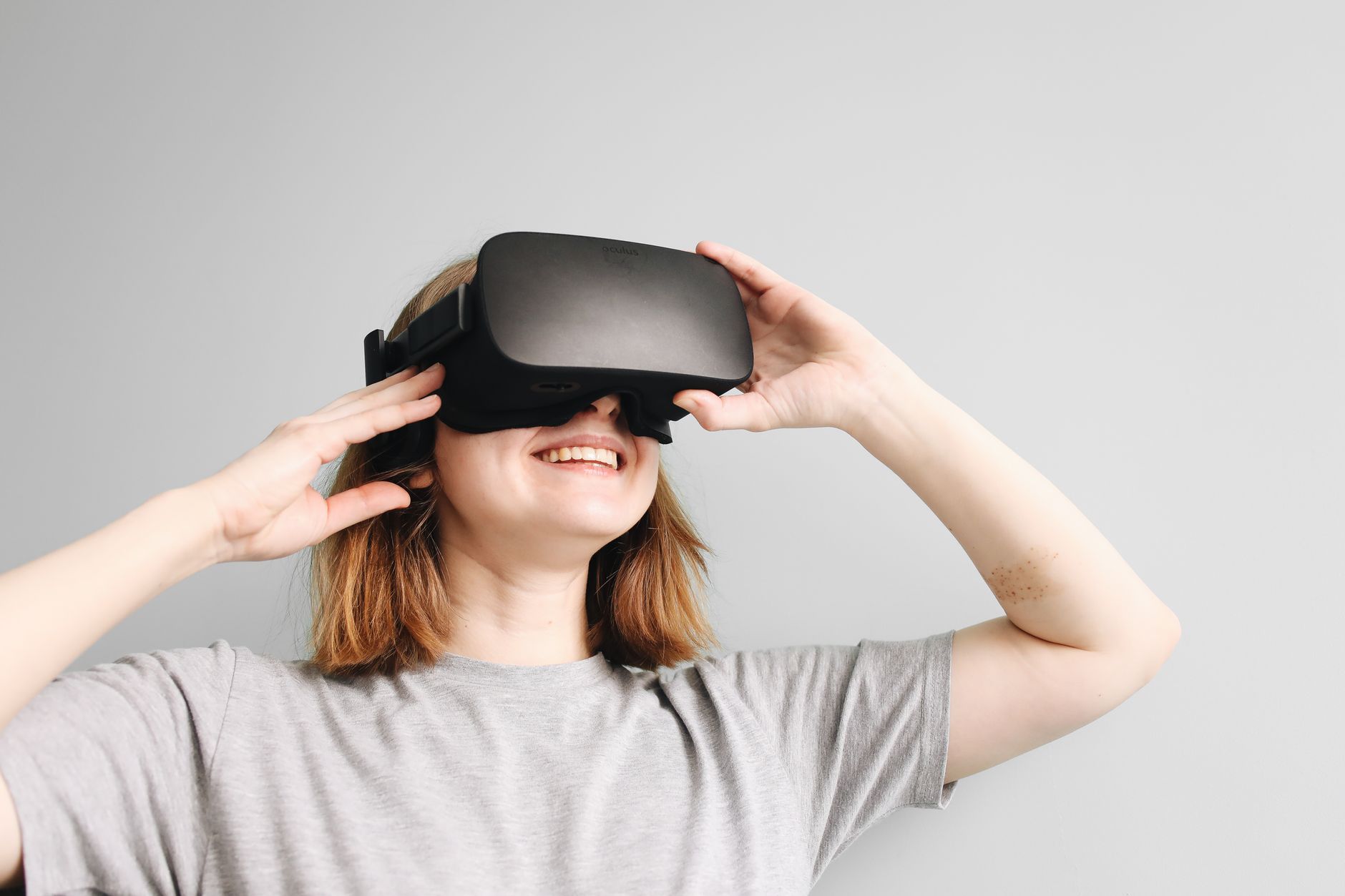
The augmented reality (AR) and virtual reality (VR) market is experiencing explosive growth, driven by advancements in hardware, software, and connectivity. As businesses and consumers increasingly adopt immersive technologies, understanding the latest market trends and practical applications is crucial for staying ahead. This article dives into key sectors where AR and VR are making an impact, offering actionable insights for businesses looking to leverage these tools.
Key Market Trends Driving AR and VR Adoption
The AR and VR market is projected to reach $100 billion by 2026, fueled by several converging trends. First, the rollout of 5G networks is enabling low-latency, high-bandwidth experiences essential for seamless AR and VR. For a deeper look at how connectivity fuels this growth, see our coverage on 5G and Beyond: How Next-Gen Networks Transform Industries. Second, the declining cost of headsets and sensors is making the technology accessible to small and medium businesses. Third, the pandemic accelerated remote collaboration, with VR meeting platforms like Spatial and Horizon Workrooms seeing a surge in users. Finally, cross-platform development tools like Unity and Unreal Engine are lowering the barrier to entry for developers.
Table: AR vs. VR Market Differences
| Aspect | Augmented Reality | Virtual Reality |
|---|---|---|
| Immersion Level | Overlays digital onto real world | Fully immersive digital environment |
| Key Hardware | Smart glasses, smartphones | VR headsets (e.g., Meta Quest, HTC Vive) |
| Primary Use Cases | Retail, navigation, training | Gaming, simulation, virtual events |
| Market Size (2023) | ~$30 billion | ~$20 billion |
Virtual Reality Applications Transforming Industries
Healthcare: Training and Therapy
Virtual reality applications in healthcare range from surgical simulation to exposure therapy for PTSD. For example, Stanford University uses VR to train neurosurgeons, resulting in 30% faster procedure times. Another example: AppliedVR offers VR-based pain management for chronic conditions, reducing opioid dependency by 40%. For patient engagement, VR can also simulate real-life scenarios for rehabilitation.
Education and Corporate Training
VR enables immersive learning environments where employees can practice soft skills or operate heavy machinery risk-free. Walmart trained 1 million associates using VR for Black Friday preparation, leading to a 10% improvement in customer service scores. With the rise of remote work, VR training platforms like Strivr are becoming standard for onboarding and upskilling.
Real Estate and Architecture
Virtual tours allow potential buyers to walk through properties remotely—a feature that reduced time-to-close by 20% in a Redfin pilot. Architects use VR to visualize designs before construction, saving millions in revisions. For instance, Zaha Hadid Architects uses VR to present complex designs to clients, improving approval rates.
Augmented Reality Business Use Cases
Retail and E-commerce
Augmented reality business applications have revolutionized shopping. IKEA Place lets customers see furniture in their home before buying—driving a 35% increase in conversion rates. Similarly, L'Oréal's AR makeup try-on increased online sales by 25%. For reviews, shoppers can use AR to see how products look in real life, reducing return rates.
Maintenance and Remote Assistance
AR glasses like Microsoft HoloLens guide technicians through repairs with overlaid instructions. Boeing reported a 40% reduction in wiring errors after implementing AR for maintenance. When combined with 5G, AR enables real-time collaboration between field workers and experts, as highlighted in our article on 5G and Beyond: How Next-Gen Networks Transform Industries.
Marketing and Advertising
AR campaigns boost engagement. Pepsi's "Unbelievable" bus shelter ad in London used AR to show flying saucers, generating 6 million social media impressions. For local businesses, AR filters on platforms like Snapchat can drive foot traffic by offering virtual coupons redeemable in-store.
How AR and VR Improve Customer Reviews and Reputation
For businesses, leveraging AR/VR can directly impact customer feedback on platforms like ours. A travel agency offering VR previews of destinations saw a 15% increase in positive reviews citing "accuracy" and "excitement." Similarly, restaurants using AR menus to show 3D dishes reported a 20% boost in ratings for food presentation. Integrating these technologies shows customers you're innovative—a trait that resonates in reviews. To maximize the impact, encourage customers to leave reviews mentioning their AR/VR experience. This not only boosts credibility but also improves search rankings for keywords like "AR VR market trends."
Future Outlook and Actionable Steps
The AR and VR market is set to grow as 5G matures and devices become lighter and cheaper. For businesses, now is the time to experiment with low-cost solutions like smartphone-based AR or VR 360 videos. Start with a pilot, collect feedback via reviews, and scale based on customer response. For example, a local gym might offer a VR class preview, gathering feedback to refine the experience. Connect your efforts with broader tech trends, such as those discussed in 5G and Beyond: How Next-Gen Networks Transform Industries, to ensure your strategy aligns with network capabilities.
Key Takeaways
- AR and VR markets are growing rapidly, driven by 5G, lower costs, and remote work.
- Virtual reality applications excel in training, therapy, and immersive simulations across industries.
- Augmented reality business use cases enhance retail, maintenance, and marketing while boosting customer engagement.
- Integrating AR/VR can improve customer reviews and brand perception.
- Start small with affordable technology and iterate based on feedback to stay competitive.
By understanding these trends and applications, businesses can harness AR and VR to delight customers, streamline operations, and build a reputation for innovation.